Helping the next 20 student leaders find their own voice.
I interviewed and evaluated 60 emerging student leaders, selected 20, and trained them through personal storytelling workshops and structured interview prep. I gave individual feedback on how to tell their own story and present themselves — helping the next generation find and communicate what actually matters to them.
01
Korea Institute of Brain Science — Experimenter & Research Intern
Dec 2025 – Jan 2026. I designed and led an experiment using an iButton temperature sensor to find which type of exercise brings a person closest to their optimal body temperature.
02
Working with real data
I collected, analyzed, and interpreted the physiological data myself, following proper experimental procedure instead of just reporting whatever looked interesting.
03
Presenting to Professor Hyun-Jung Yang
I presented my design, method, findings, and implications to Professor Hyun-Jung Yang and got feedback on both the science and the way I communicated it.
Featured Coverage
The selection process
I helped design and run a structured interview process for 60 emerging student leaders applying to the Youth Leadership Cohort. From that pool, we selected 20 to move into an intensive training track focused on personal storytelling and self-presentation.
What I taught
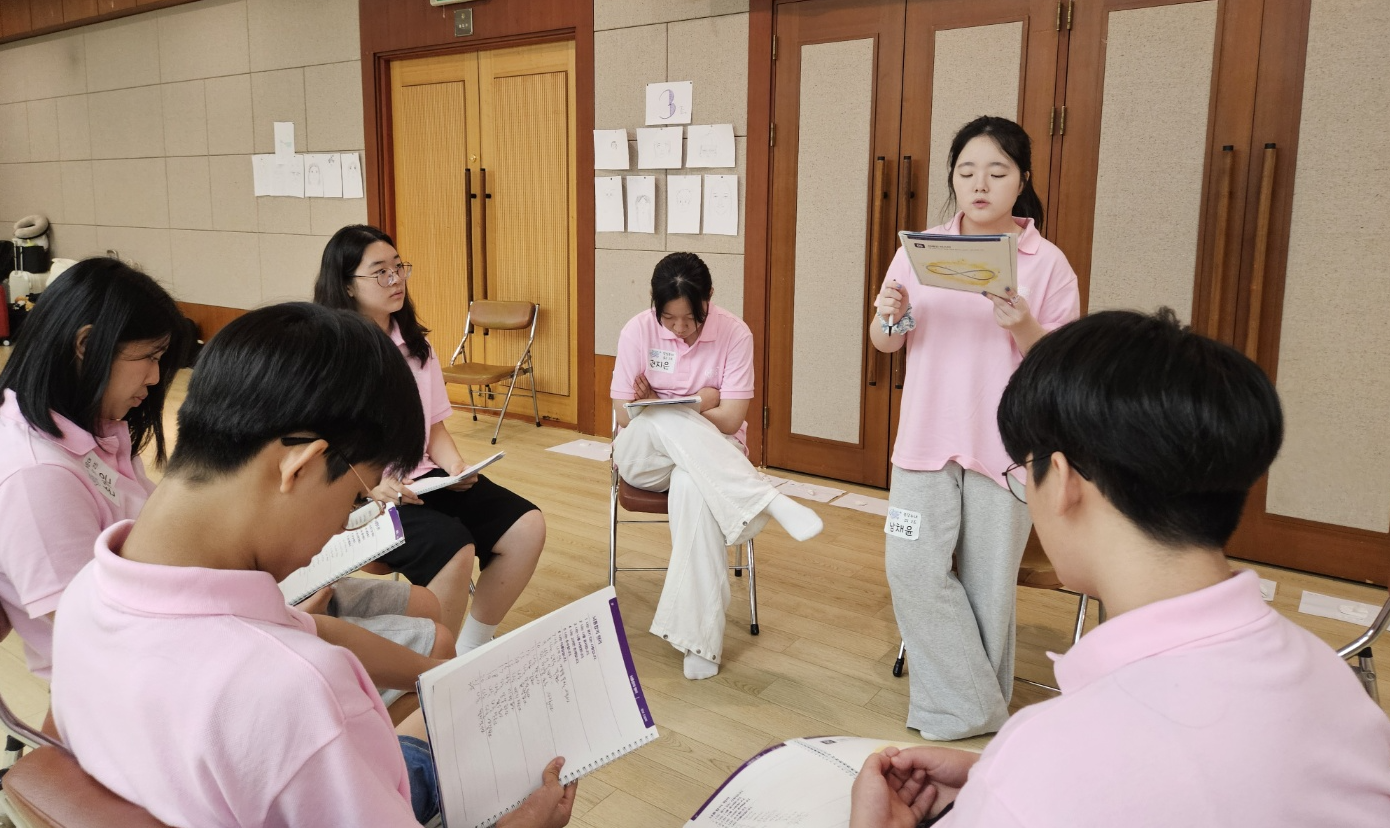
The training wasn't about producing polished 'perfect' answers. It was about helping students find the specific experiences, values, and turning points that actually shaped them — and then articulate those stories in a way that felt honest under pressure. I ran workshops on narrative structure, gave one-on-one feedback on interview drafts, and coached students through mock interviews.
Why storytelling
In a school system that measures students mostly by test scores, most young leaders I met had never been asked what their story actually was. Once they could name it, everything else — leadership, applications, decisions about their future — became easier. That's the same premise behind PathWay and the NHS project: give people better tools to see themselves clearly.
The brain science internship
Through the program I also interned at the Korea Institute of Brain Science over the winter of 2025–26. I ran my own experiment: using an iButton temperature sensor, I tested which kind of exercise brings a person closest to their optimal body temperature. It was the first time I had to defend a method rather than just an opinion — collecting the data, cleaning it, deciding what it actually proved, and then presenting all of it to Professor Hyun-Jung Yang. Her feedback made me realize how much of science is communication.
Why both halves matter to me
Mentoring taught me how people explain themselves; the lab taught me how to test what I believe. I want to work at the point where those meet — using evidence about how people actually think and grow, not assumptions, to design better ways for young people to choose their futures.