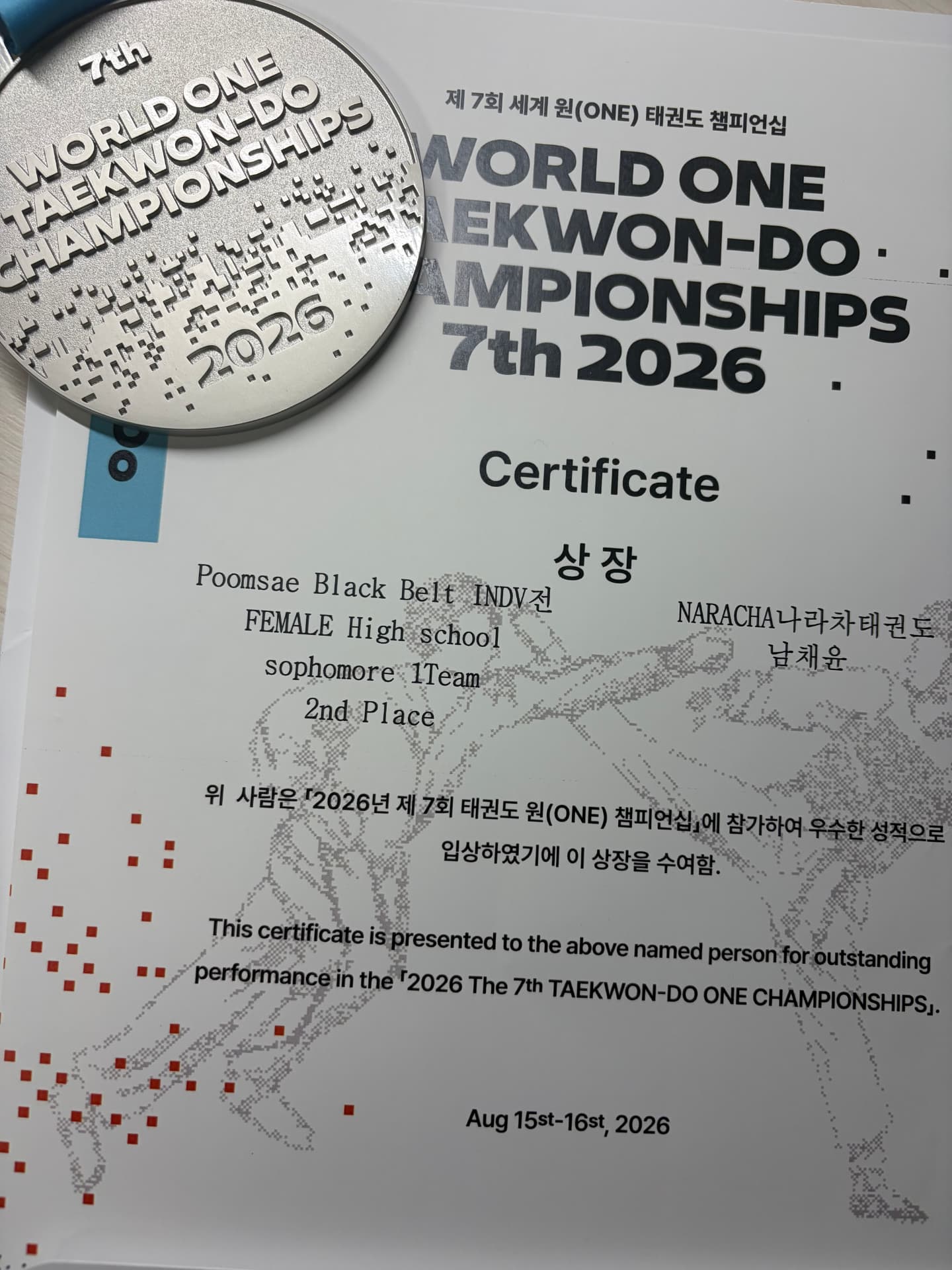
Seven years of showing up, and teaching kids to keep showing up.
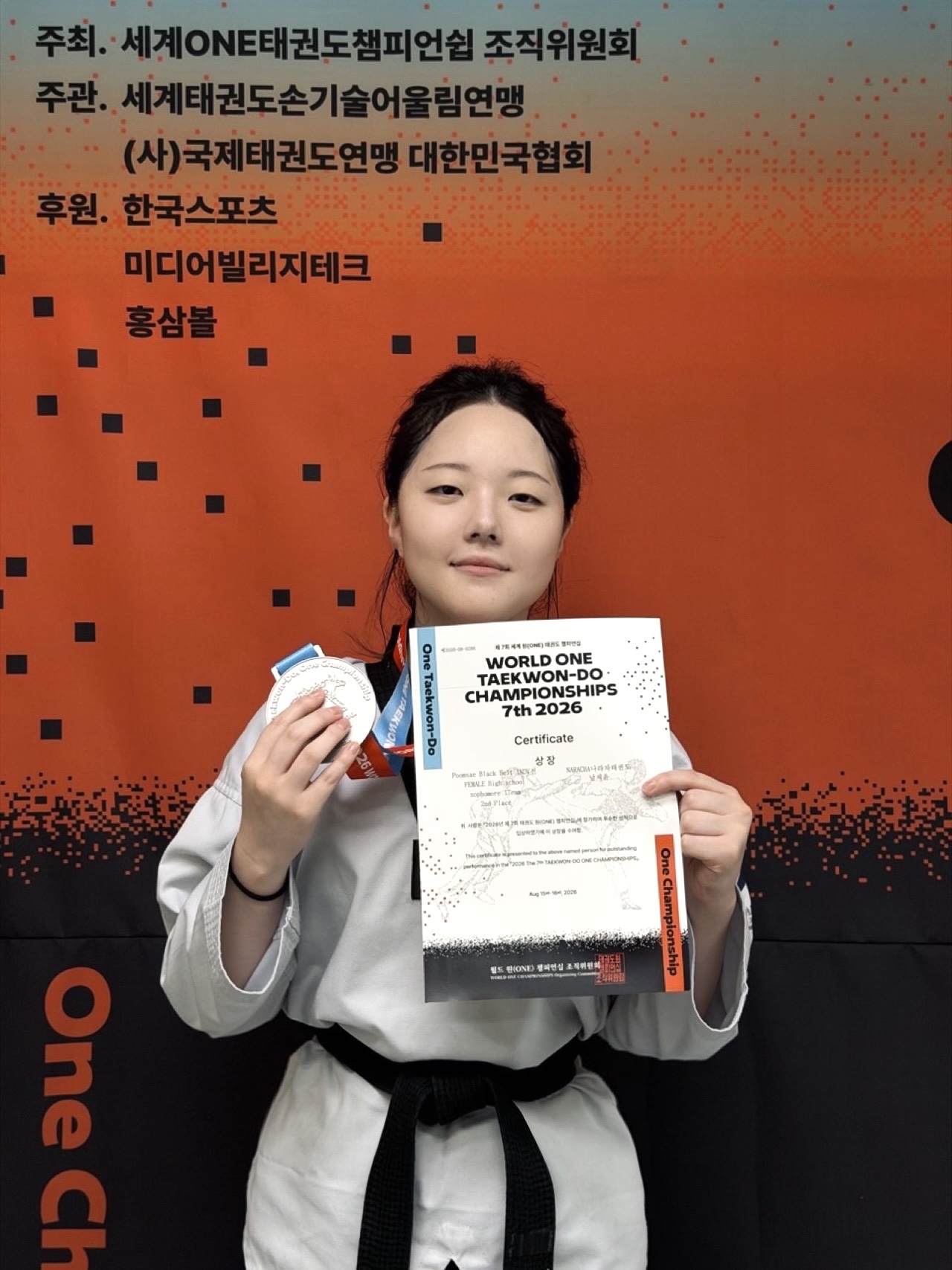
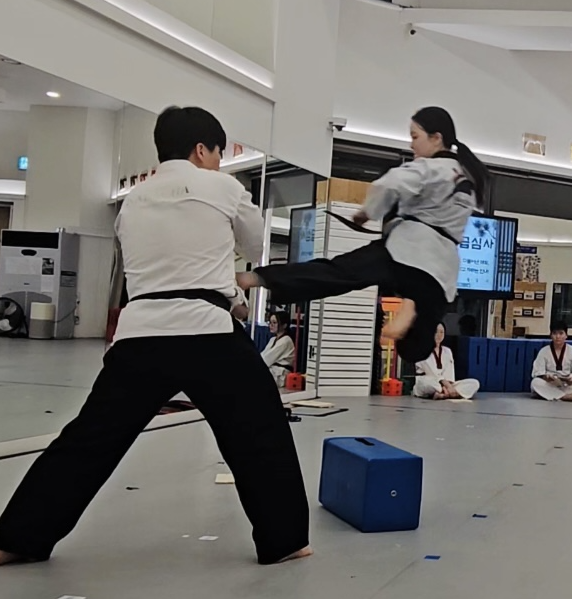
I've trained in Taekwondo for seven years and hold a 2nd Dan black belt. I started competing, then started teaching — mentoring elementary and middle school students, and interviewing them about what actually makes a young person stick with something hard.
01
Competing
I've competed in multiple tournaments. Losing in front of people taught me more about resilience and pressure than any win did.
02
Mentoring younger students
I coach elementary and middle school practitioners on technique, but mostly on confidence — the belief that they'll get it if they keep coming back.
03
Interviewing the kids
I interviewed younger students about why they keep training. Their answers were rarely about medals; they were about a coach who noticed them or a friend who waited for them.
Why I stayed seven years
I started Taekwondo in 2020 and never found a good reason to quit. It's the one part of my week that isn't graded, ranked, or compared to anyone else's transcript. Earning my 2nd Dan took years of repeating the same movements badly until they were good — a very different kind of learning than the one Korean school rewards.

From student to mentor
Once I was senior enough, I began helping younger students. What surprised me was how little of the job was technical. Most kids who quit don't quit because they can't do the kick — they quit because they feel behind, or unseen. So I spent most of my time telling them what they'd improved at, specifically, that week.
What the interviews told me
I asked elementary and middle school students what made them keep training. Almost none said trophies. They said things like 'my teacher remembers my name' or 'my friends are here.' That's when it clicked: motivation in teenagers isn't manufactured by pressure, it's produced by belonging. Supportive communities and real mentorship are what let young people push through hard things.
How it connects to everything else
This is the same finding underneath PathWay, my peer counseling training, and the mentoring I do with the Youth Leadership Cohort. People keep going when someone sees them clearly. If Korea wants students to take risks in a changing economy, it has to give them that first.